Ventral Mesh Rectopexy for Pelvic Floor Disorders
By Dr. Vikram Singh, Consultant Laparoscopic, Laser & General Surgeon, Sir Ganga Ram Hospital, New Delhi
What is ventral mesh rectopexy?
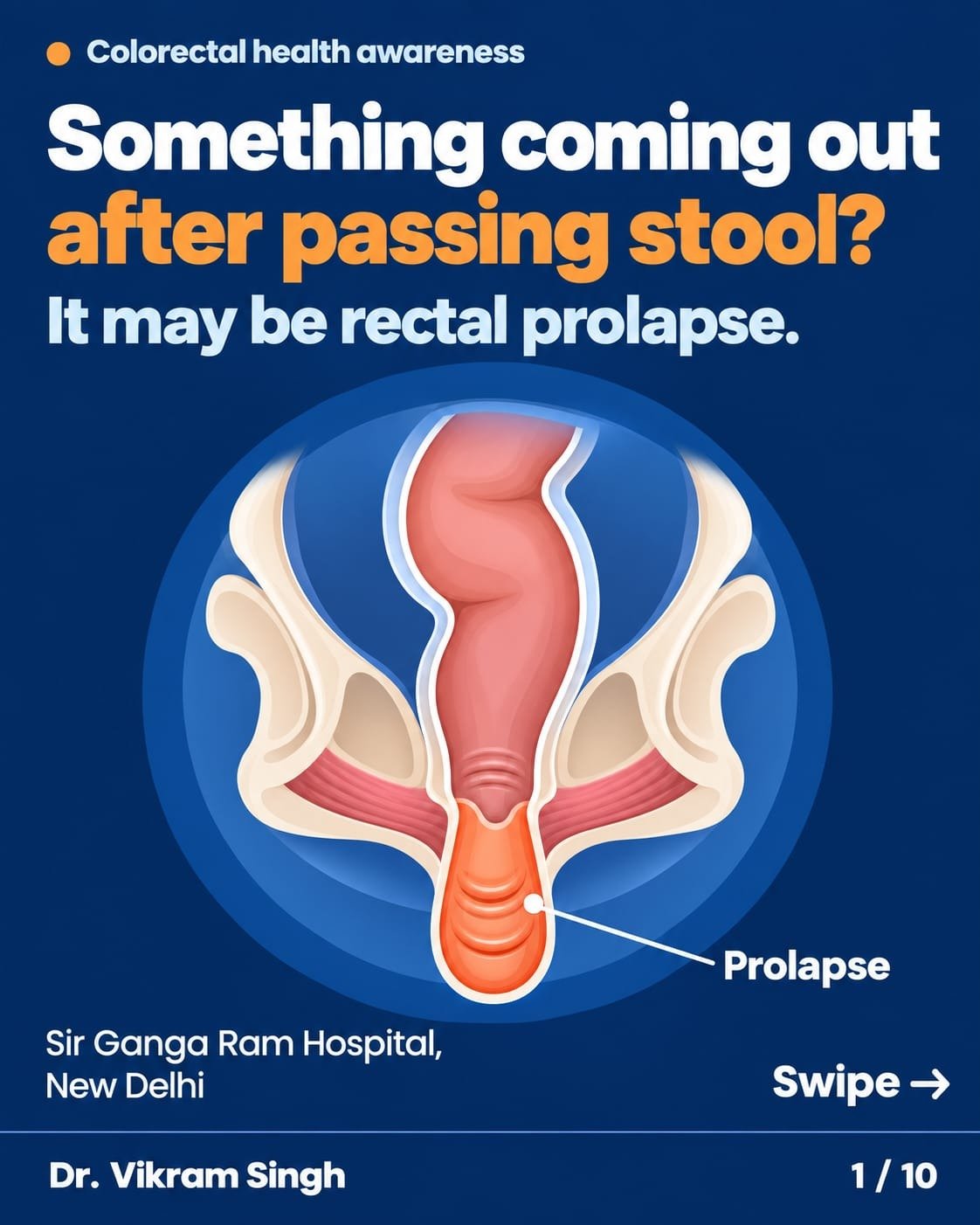
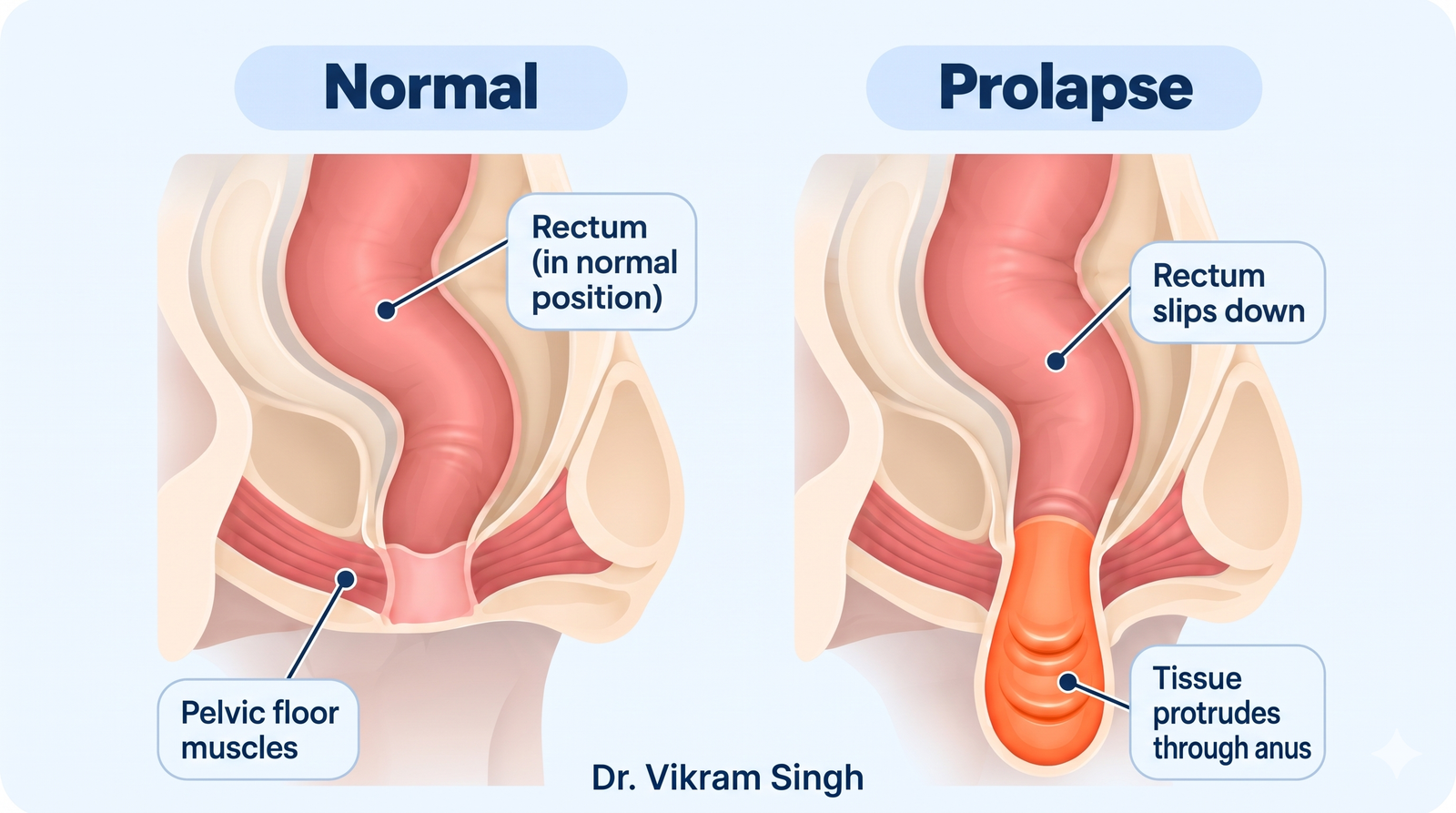
Ventral mesh rectopexy (VMR) is a minimally invasive operation that treats rectal prolapse, internal rectal intussusception, and rectocele. A thin mesh is fixed to the front (ventral) wall of the rectum and anchored to the sacral promontory, restoring normal anatomy and function. It is done laparoscopically or robotically, usually through 4 to 5 small incisions.
Which conditions does it treat?
-
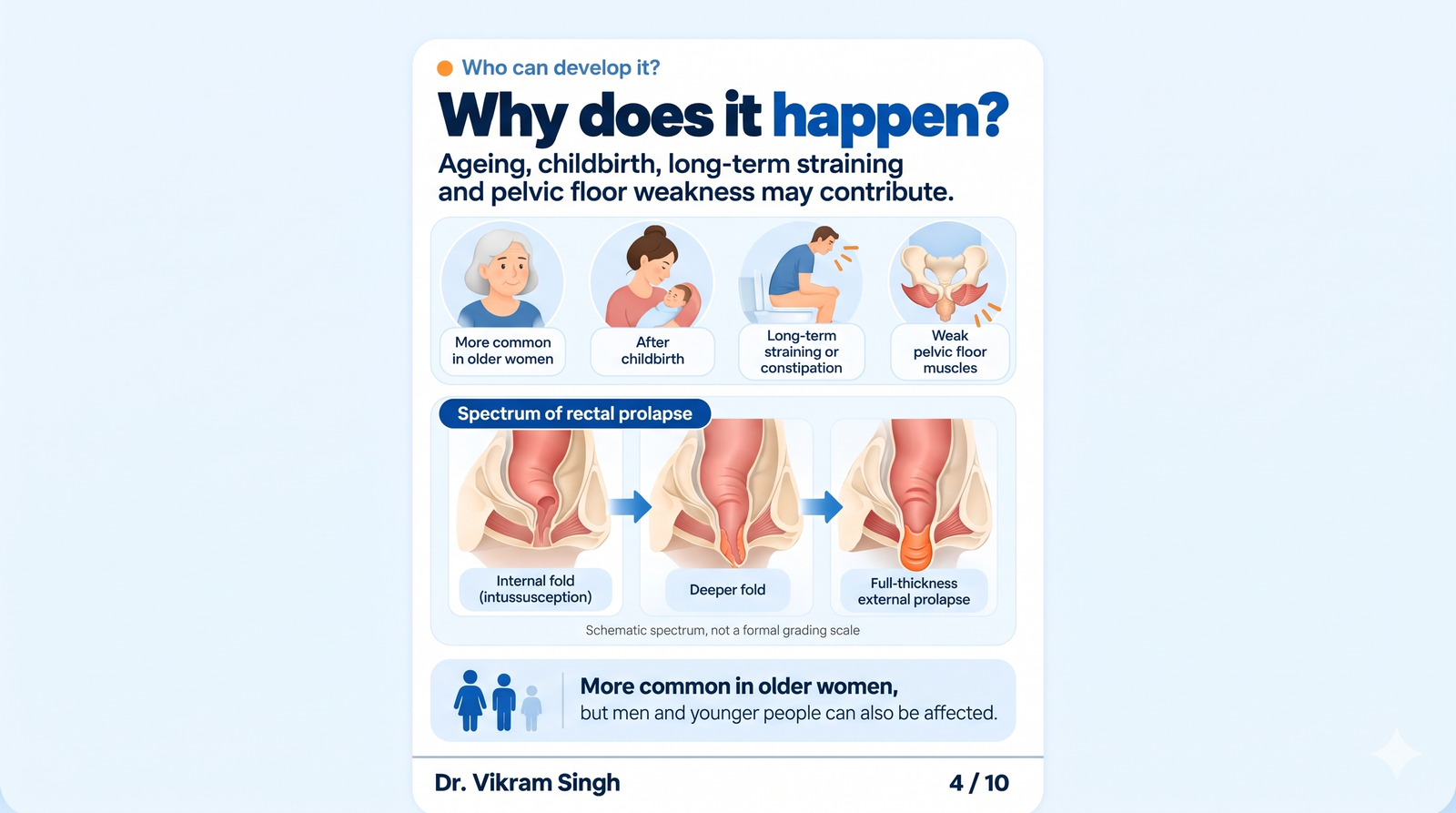
Full-thickness rectal prolapse
-
Internal rectal prolapse (intussusception)
-
Rectocele with obstructed defecation syndrome
-
Faecal incontinence linked to prolapse
-
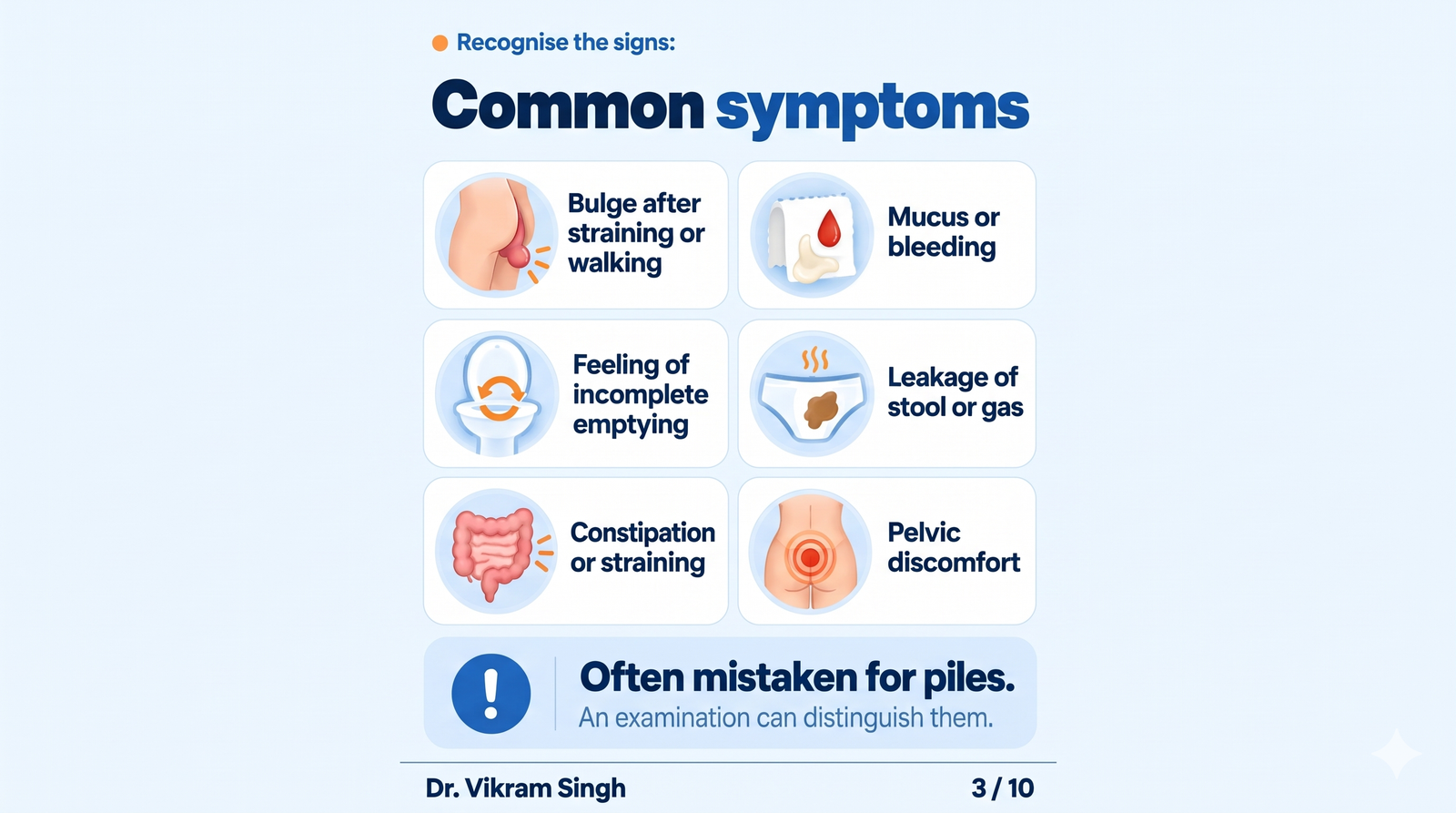
Incomplete evacuation, straining, and pelvic heaviness
How is it different from older rectopexy?
D’Hoore and colleagues described laparoscopic ventral rectopexy in British Journal of Surgery (2004). Unlike posterior rectopexy, the procedure avoids mobilising the rectum’s lateral ligaments, which protects the autonomic nerves. This is why it carries a lower risk of new or worsened constipation and sexual dysfunction.
What does the evidence show?
Who is a good candidate?
Patients with symptomatic prolapse or obstructed defecation who have not improved with fibre, pelvic floor physiotherapy, and biofeedback. Workup includes clinical examination, defecography (or MR defecography), anorectal manometry, and colonoscopy when indicated.
What are the risks and recovery?
Hospital stay is typically 1 to 2 days, and most patients resume normal activity within 2 weeks. Risks include bleeding, infection, mesh-related complications (rare with modern biologic or lightweight synthetic mesh), and recurrence. Outcomes depend on surgeon experience and careful patient selection.
Why choose a specialist centre?
Pelvic floor disorders often involve multiple compartments and need a coordinated team across colorectal surgery, urogynaecology, and physiotherapy.
Frequently asked questions
Q. Is ventral rectopexy safe?
Yes. In experienced hands, serious complications are uncommon and nerve-related side effects are low.
Q. Will the prolapse come back?
Recurrence is low in published series, though no operation guarantees a permanent cure.
Q. Is it done laparoscopically or robotically?
Both are accepted approaches, with similar functional outcomes.
Q. Can it be done in older patients?
Often yes, since it avoids major bowel resection, but fitness for anaesthesia must be assessed.
Medical disclaimer:
This article is for patient education and does not replace a personal consultation. Please consult a qualified surgeon for diagnosis and treatment. [Dr Vikram Singh, Consult Sir Ganga Ram Hospital New Delhi.]