Obstructed Defecation Syndrome (ODS): Surgical Treatment of Constipation
By Dr. Vikram Singh, Consultant Laparoscopic, Laser & General Surgeon, Sir Ganga Ram Hospital, New Delhi (FISC)
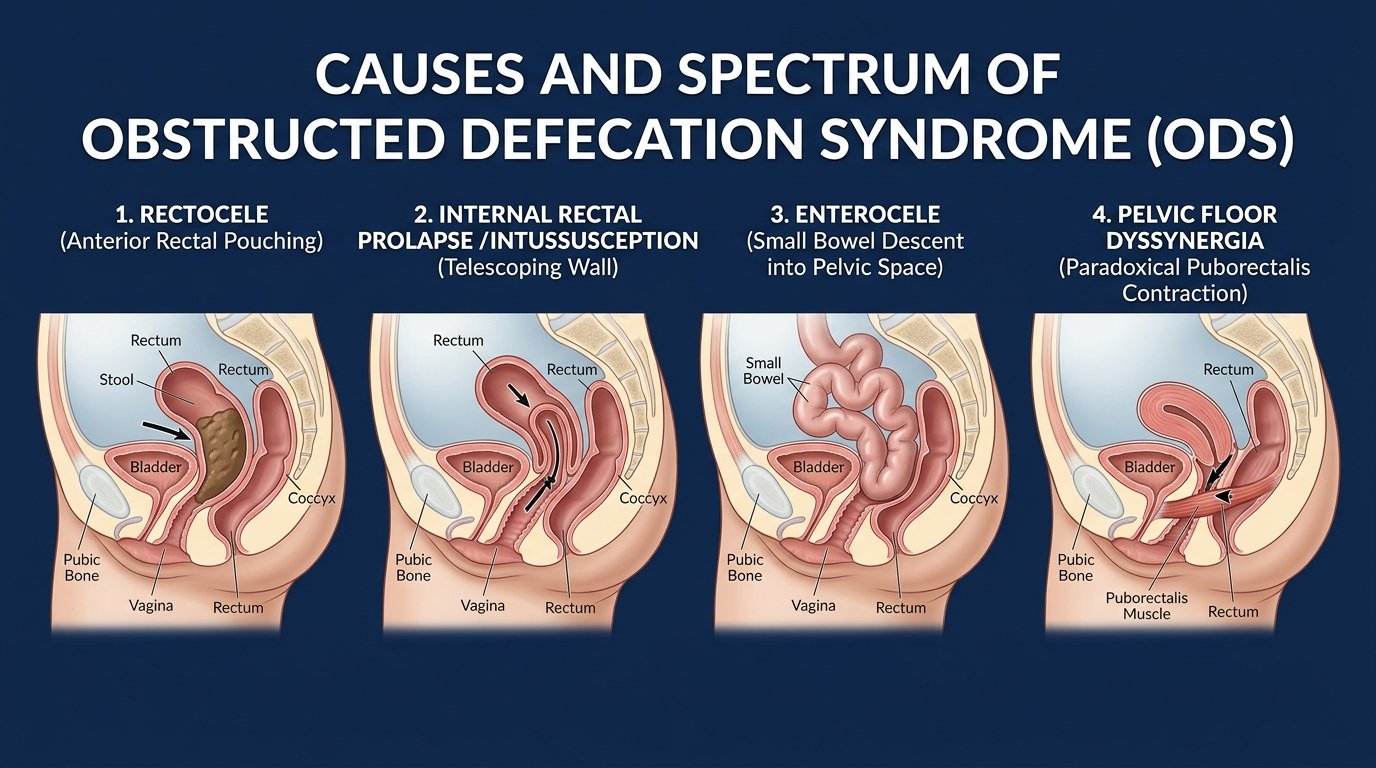
What is obstructed defecation syndrome?
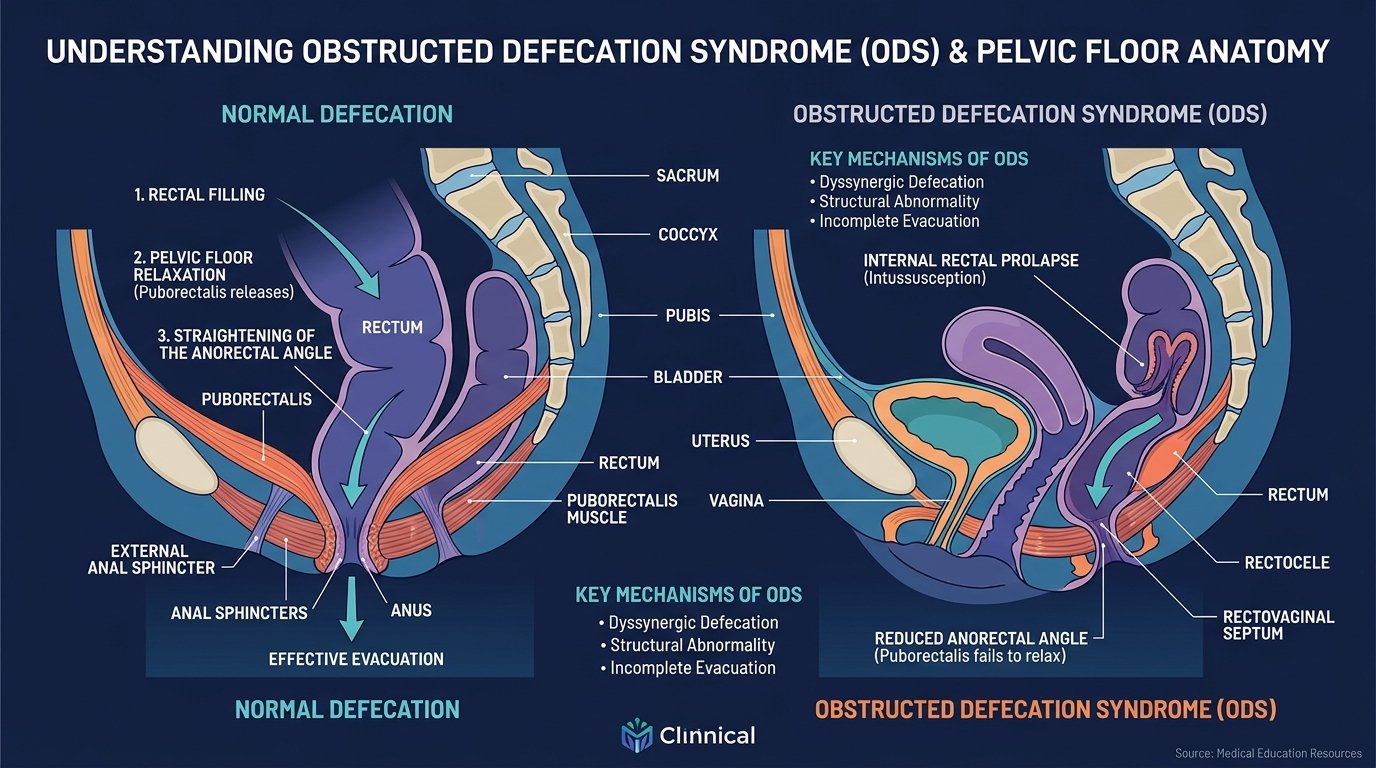
Obstructed defecation syndrome (ODS) is a type of constipation in which the rectum cannot empty despite the urge to pass stool. It is caused by structural problems such as rectocele, internal rectal prolapse, or enterocele, or by pelvic floor muscles that do not relax properly.
What are the symptoms of ODS?
- Prolonged and repeated straining
- Sense of incomplete emptying or a blocked passage
- Pressing on the vagina or perineum, or using a finger, to pass stool
- Passing stool in small pieces or needing several toilet visits
- Pelvic heaviness or a bulge
How is ODS different from other constipation?
In slow-transit constipation, stool moves slowly through the colon. In ODS, stool reaches the rectum but cannot be evacuated. This difference decides which tests you need and whether surgery can help.
How is ODS diagnosed?
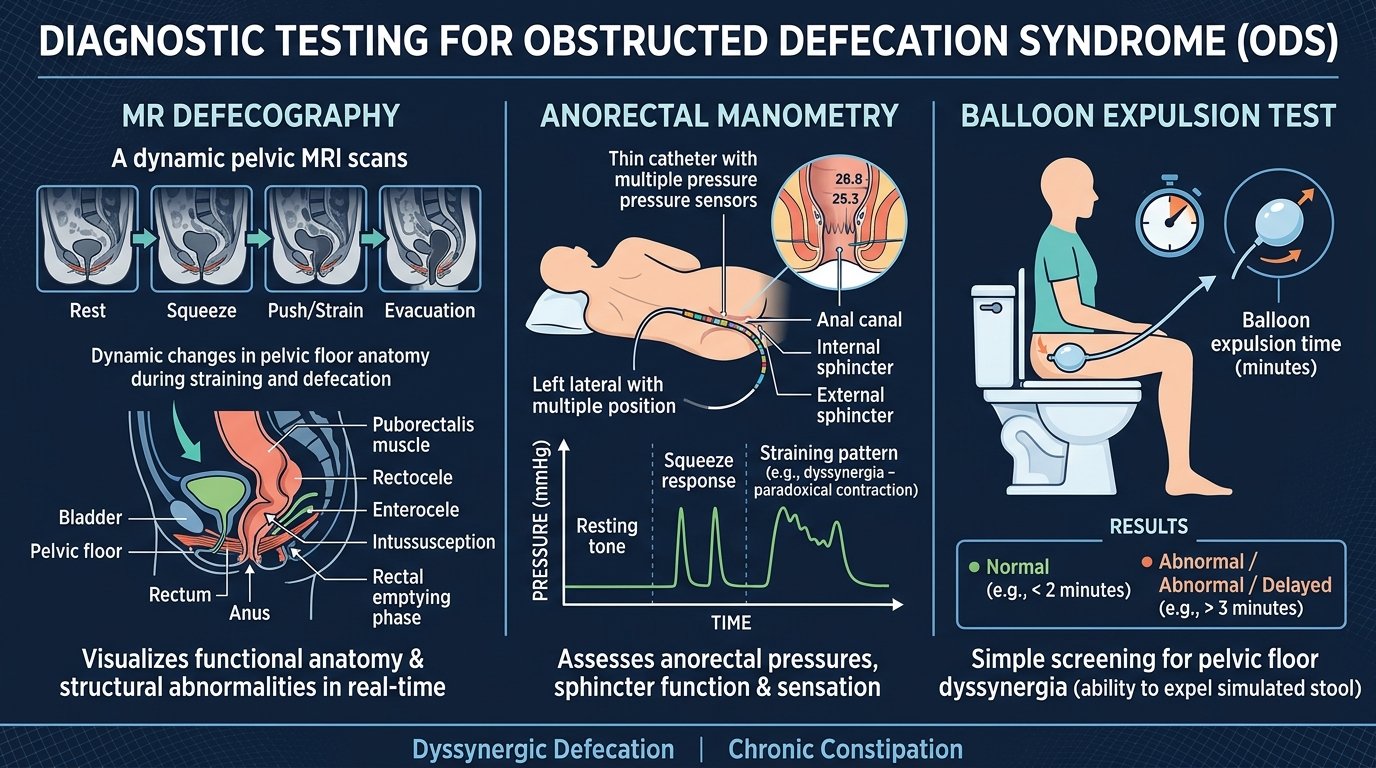
Diagnosis combines a clinical and rectal examination with defecography or MR defecography, anorectal manometry, and a balloon expulsion test. Colonoscopy is done when there is bleeding, weight loss, anaemia, or a recent change in bowel habit. A colonic transit study is added if slow-transit constipation is suspected.
How is ODS treated without surgery?
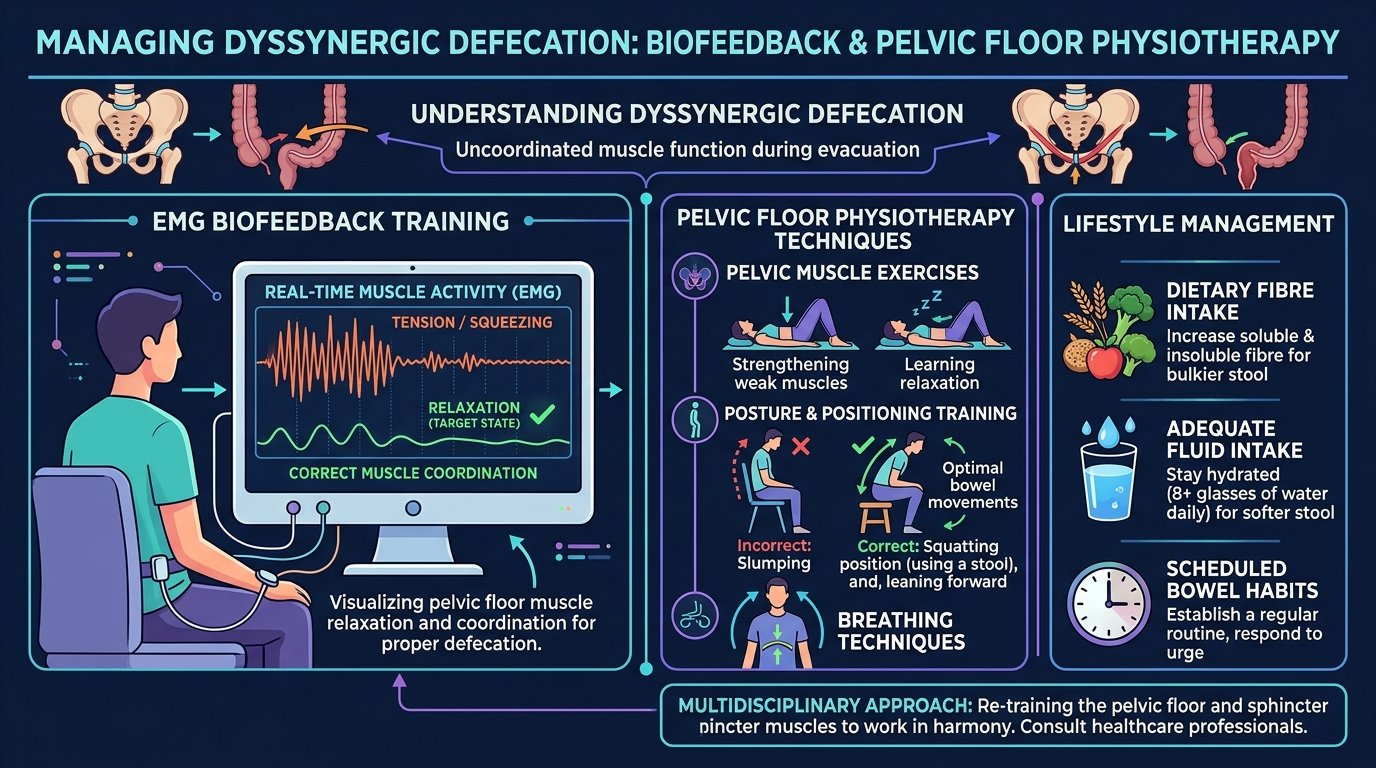
First-line treatment is fibre, fluids, toilet training, and laxatives. For dyssynergic defecation, biofeedback and pelvic floor physiotherapy are the treatment of choice and are often more effective than surgery.
When is surgery needed?
Surgery is considered when a structural cause is confirmed on defecography and symptoms have not improved with conservative treatment, including biofeedback. Patients with dyssynergia alone are not good surgical candidates.
Which operations treat ODS?
-
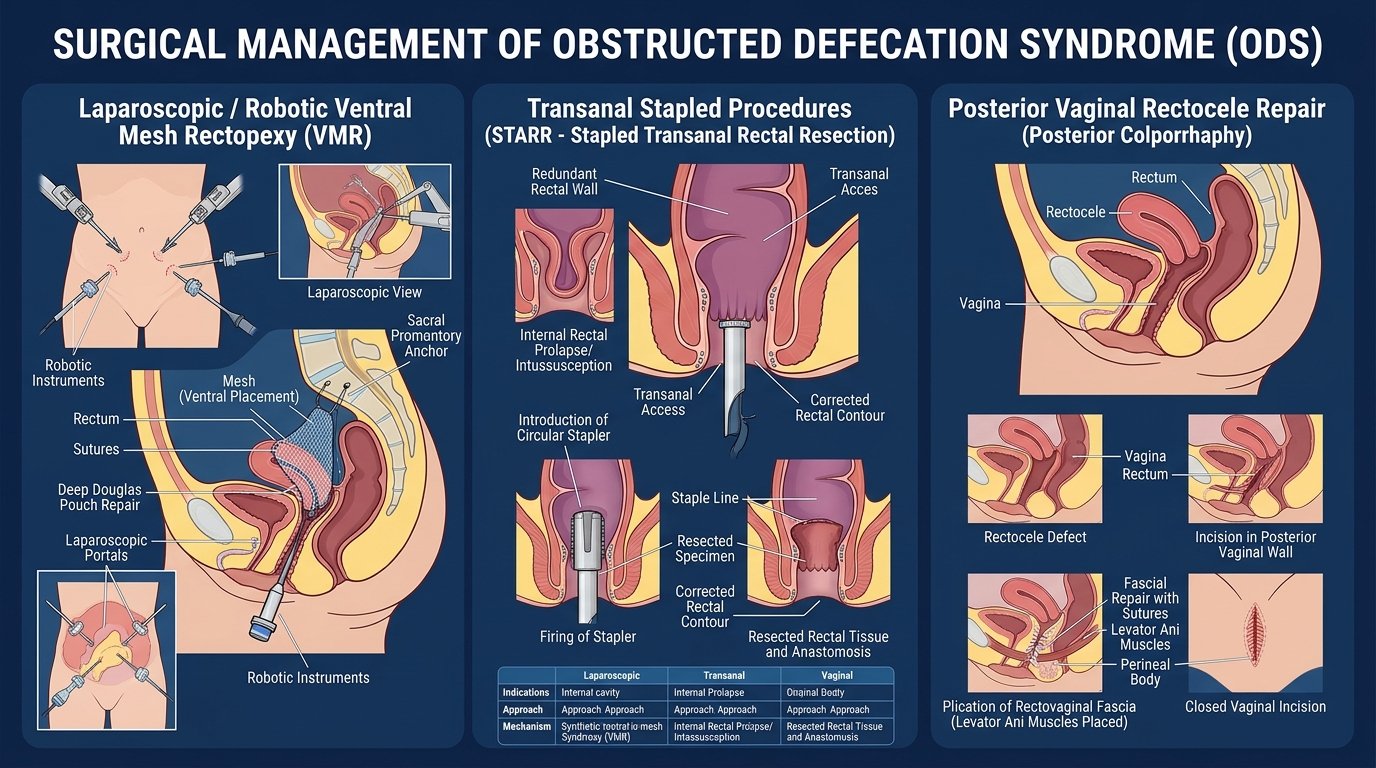
Laparoscopic or robotic ventral mesh rectopexy for internal prolapse, rectal prolapse, or rectocele with obstructed defecation
-
Transanal stapled procedures in carefully selected patients
-
Posterior vaginal or perineal repair for an isolated rectocele
-
Colectomy only in very selected slow-transit constipation, not for ODS alone
What does the evidence show?
International consensus (Mercer-Jones et al., Colorectal Disease, 2014) supports ventral rectopexy as an option for obstructed defecation with internal prolapse or rectocele. Evans et al. (Diseases of the Colon & Rectum, 2014) reported improved obstructed defecation symptoms after the operation. [Add your own series and outcomes here.]
What are the risks and recovery?
Risks include bleeding, infection, pain, urgency, mesh-related complications, recurrence, and persistent symptoms. After laparoscopic ventral rectopexy, hospital stay is usually 1 to 2 days and most patients resume light activity within about 2 weeks.
Frequently asked questions
Q. What is obstructed defecation syndrome (ODS)?
Obstructed defecation syndrome is a type of constipation in which you feel the urge to pass stool but cannot empty the rectum despite straining. It is caused by a structural problem such as rectocele or internal rectal prolapse, or by pelvic floor muscles that fail to relax.
Q. Is ODS the same as ordinary constipation?
No. In ordinary (slow-transit) constipation, stool moves slowly through the colon. In ODS, stool reaches the rectum but cannot be evacuated properly. The tests and treatments are different.
Q. What causes obstructed defecation?
Common causes are rectocele, internal rectal intussusception, rectal prolapse, enterocele, and dyssynergic defecation, where the pelvic floor muscles tighten instead of relaxing during straining.
Q. How is ODS diagnosed?
Diagnosis uses clinical examination, defecography or MR defecography, anorectal manometry, a balloon expulsion test, and colonoscopy when indicated. A colonic transit study is added if slow-transit constipation is suspected.
Q. When is surgery needed for constipation?
Surgery is considered only when a structural cause is confirmed on defecography and symptoms have not improved with fibre, laxatives, pelvic floor physiotherapy, and biofeedback.
Q. Is biofeedback better than surgery for ODS?
For dyssynergic defecation, biofeedback is first-line and often works better than surgery. For a structural cause such as a large rectocele or internal prolapse, surgery may be needed after conservative care fails.
Q. Which operations treat ODS?
Options include laparoscopic or robotic ventral mesh rectopexy, transanal procedures, and rectocele repair. The choice depends on the cause found on defecography and on the patient’s overall health.
Q. How long is recovery after ODS surgery?
It depends on the procedure. After laparoscopic ventral rectopexy, most patients stay 1 to 2 days in hospital and return to light activity within about 2 weeks.
Q. What are the risks of ODS surgery?
Risks include bleeding, infection, pain, urgency, mesh-related complications, recurrence, and persistence of symptoms. Careful patient selection is the best way to lower the chance of a poor result.
Q. When should I see a specialist for constipation?
See a specialist if straining or incomplete emptying persists despite fibre and laxatives, if you need to press on the vagina or perineum to pass stool, or if there is rectal bleeding, weight loss, anaemia, or a recent change in bowel habit.