Surgical Treatment of Constipation: Obstructed Defecation Syndrome (ODS), A Surgeon’s Guide
Written by Dr. Vikram Singh, Consultant Laparoscopic, Laser & General Surgeon, Sir Ganga Ram Hospital, New Delhi
Quick answer
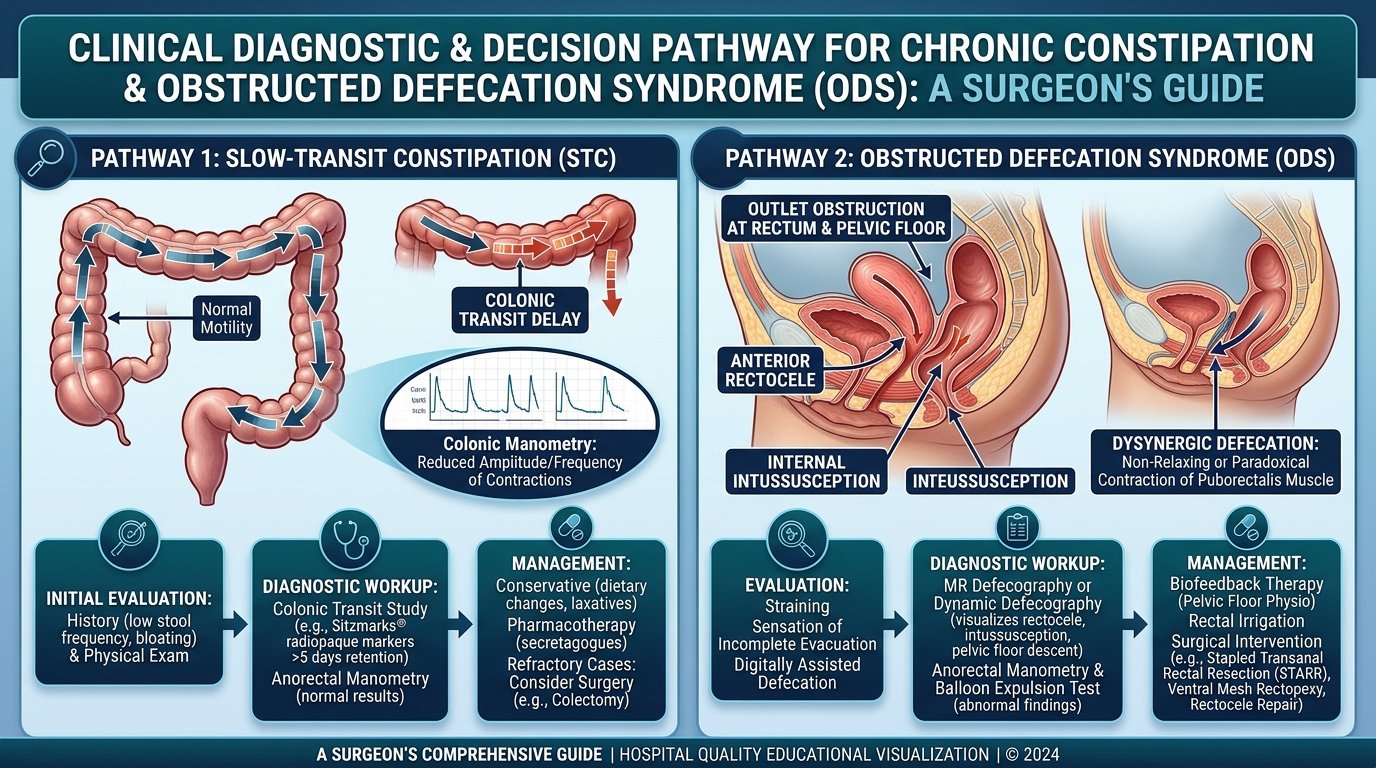
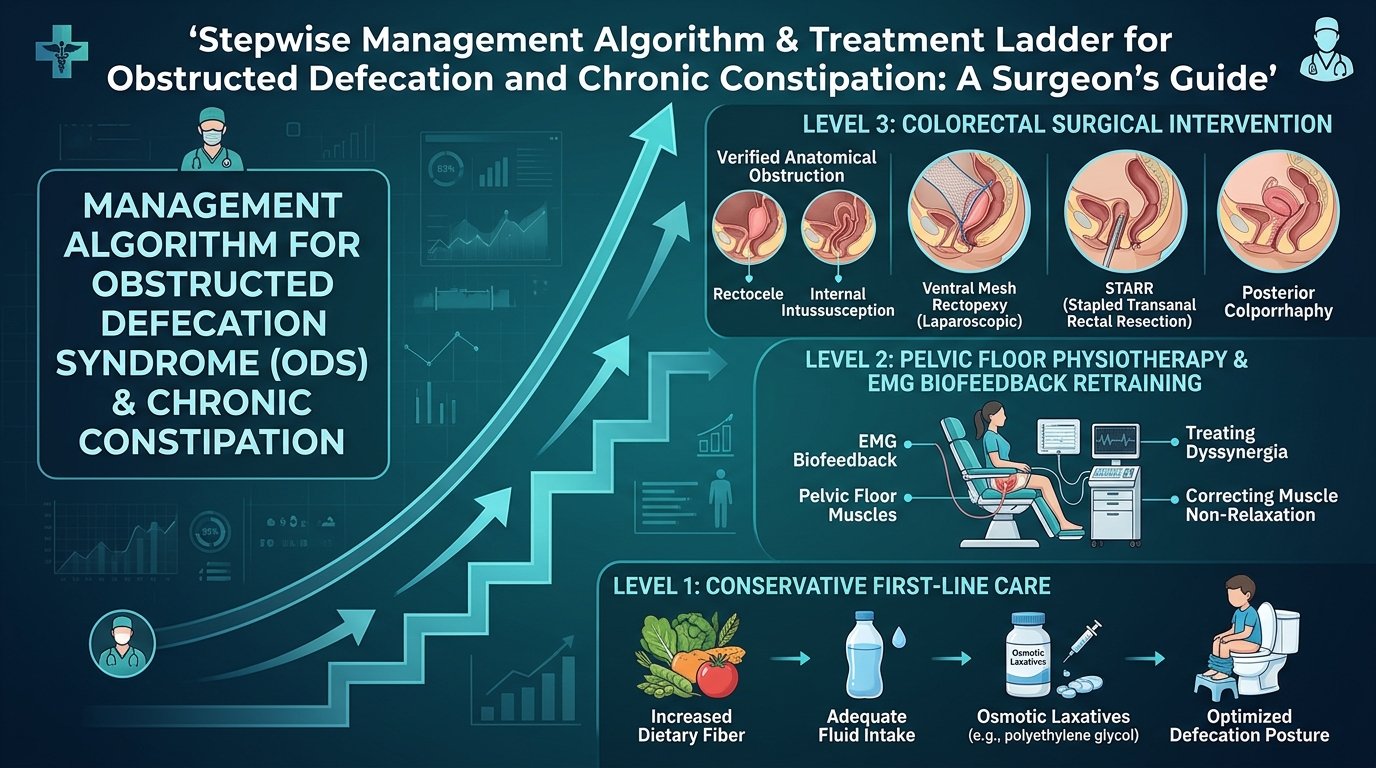
Obstructed defecation syndrome (ODS) is a form of constipation where the rectum cannot empty despite the urge to pass stool. It is caused by structural problems such as rectocele or internal rectal prolapse, or by poor pelvic floor coordination. Surgery is considered only after fibre, laxatives, pelvic floor physiotherapy, and biofeedback fail and defecography confirms an anatomical cause.
Key takeaways
-
ODS is different from slow-transit constipation and needs different tests and treatment.
-
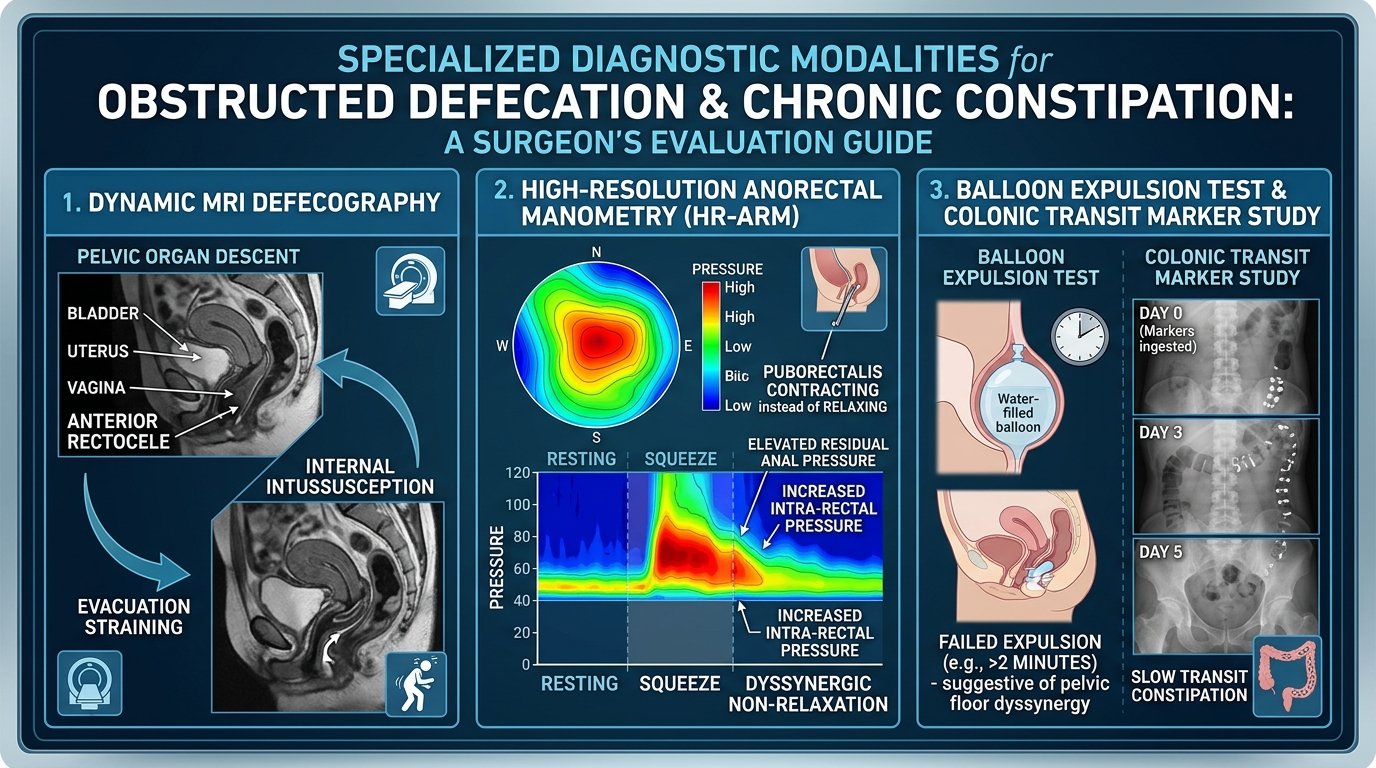
Defecography (or MR defecography) and anorectal physiology tests decide whether surgery will help.
-
Biofeedback is first-line for dyssynergic defecation; surgery does not fix poor muscle coordination.
-
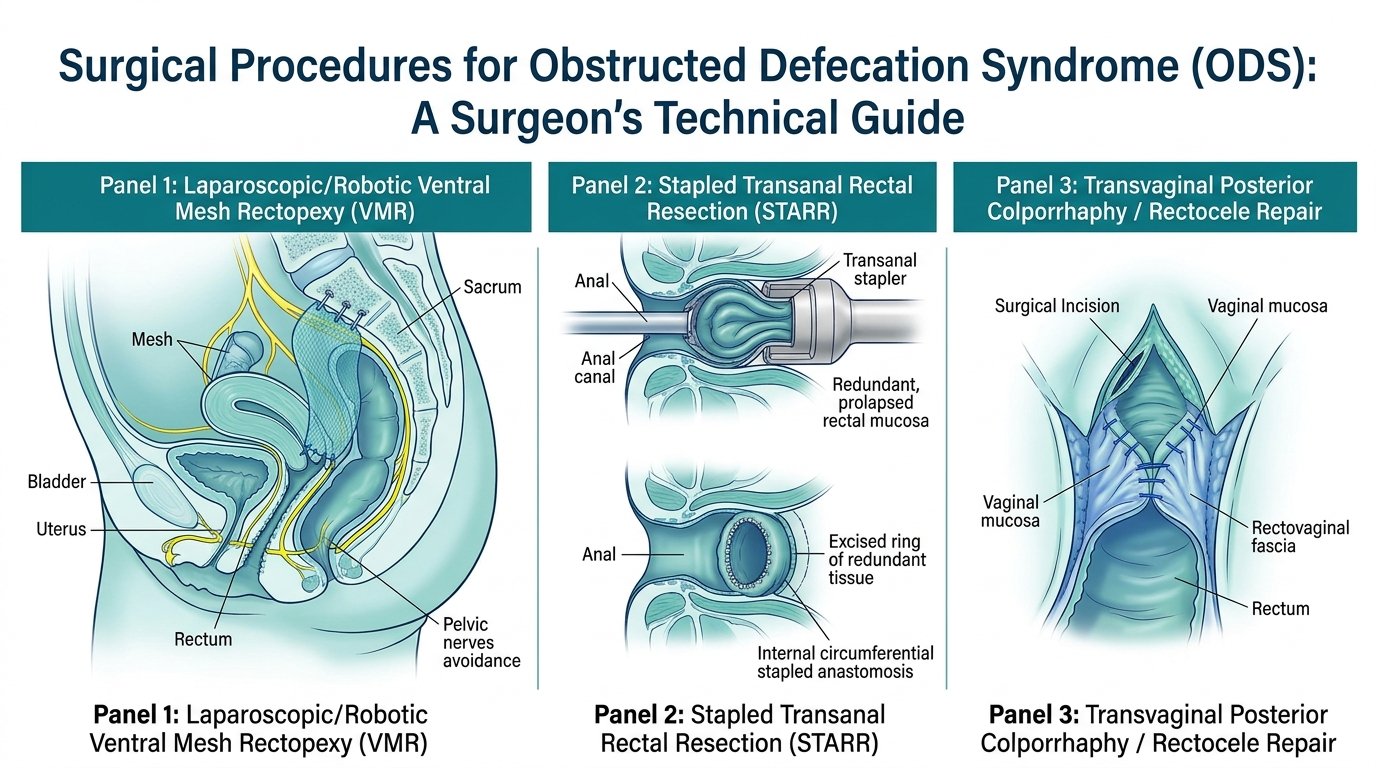
Options for a structural cause include laparoscopic or robotic ventral mesh rectopexy, transanal procedures, and rectocele repair.
-
Rectal bleeding, weight loss, anaemia, or a recent change in bowel habit need colonoscopy before any constipation treatment.
What is obstructed defecation syndrome?
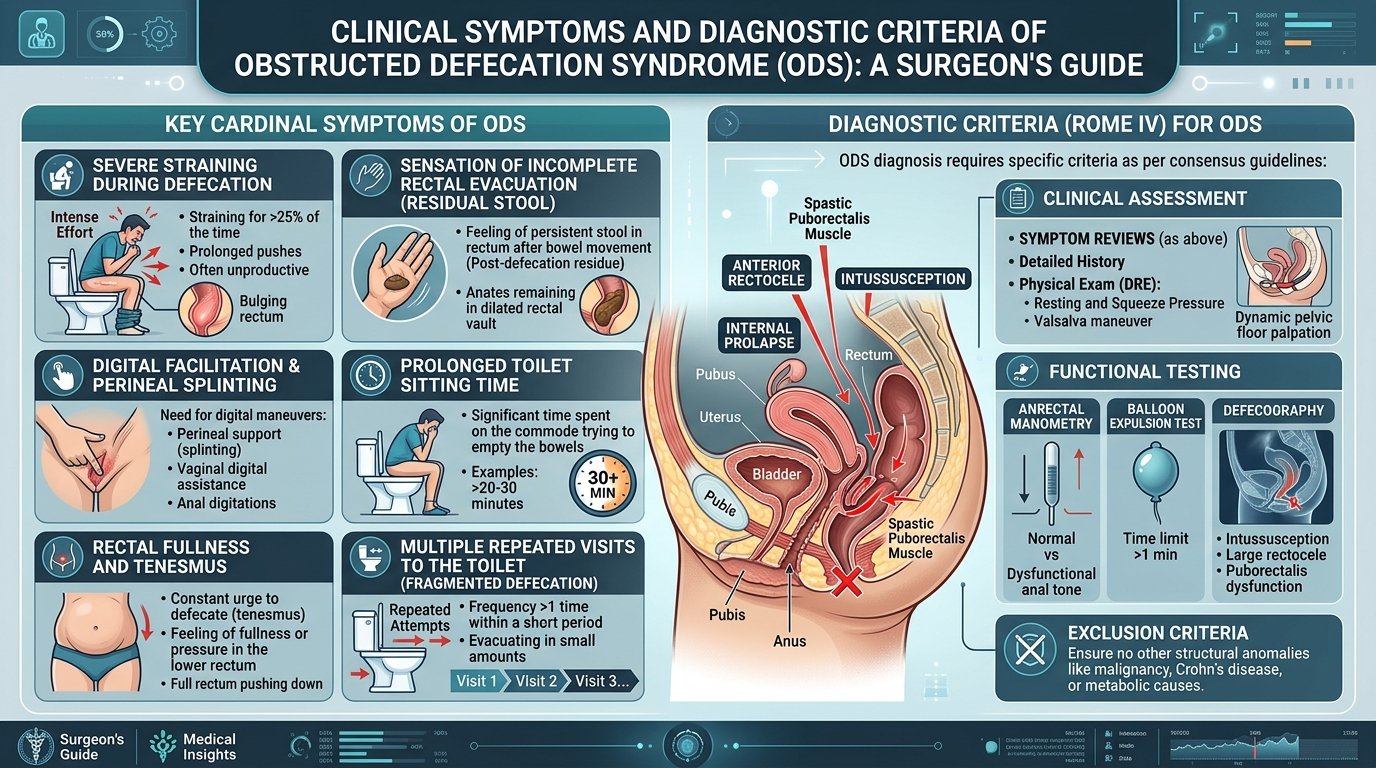
ODS is a pelvic floor disorder where the problem lies at the exit, not in the colon’s movement. Patients strain for long periods, feel a blockage or incomplete emptying, and some need to press on the vagina or perineum, or use a finger, to pass stool. The commonest structural causes are rectocele, internal rectal intussusception, rectal prolapse, and enterocele. A functional cause, called dyssynergic defecation, occurs when the pelvic floor muscles tighten instead of relaxing during straining.
What are the symptoms of ODS?
- Prolonged and repeated straining
- Sense of incomplete emptying or a blocked passage
- Need to press on the vagina or perineum (splinting) or use a finger (digitation)
- Passing stool in small pieces or needing several visits to the toilet
- Pelvic heaviness or a bulge
How is ODS different from other types of constipation?
| Feature | Slow-transit constipation | ODS: structural | ODS: functional (dyssynergia) |
|---|---|---|---|
| Main problem | Slow movement of stool through the colon | Rectocele, internal prolapse, enterocele | Pelvic floor muscles fail to relax |
| Key test | Colonic transit study | Defecography or MR defecography | Anorectal manometry, balloon expulsion test |
| First-line treatment | Fibre, laxatives, lifestyle | Conservative care, then consider surgery | Biofeedback therapy |
| Role of surgery | Rare, highly selected | Yes, if conservative care fails | Not helpful |
How is ODS diagnosed?
-
1Detailed history and clinical examination, including a pelvic floor and rectal examination.
-
2Colonoscopy when there are alarm features or at screening age.
-
3Defecography or MR defecography to see the rectum emptying.
-
4Anorectal manometry and balloon expulsion test to check muscle coordination.
-
5Colonic transit study when slow-transit constipation is suspected.
What are the treatment options?
| Treatment | Best suited for | Key points |
|---|---|---|
| Fibre, fluids, laxatives, toilet training | All patients, first step | Often improves mild symptoms |
| Biofeedback and pelvic floor physiotherapy | Dyssynergic defecation | First-line; non-surgical |
| Ventral mesh rectopexy (laparoscopic or robotic) | Internal prolapse, rectal prolapse, rectocele with obstructed defecation | Preserves lateral ligaments, lower nerve-related risk |
| Transanal stapled procedures | Selected patients with rectocele or intussusception | Needs careful selection; urgency and pain can occur |
| Posterior vaginal or perineal rectocele repair | Isolated symptomatic rectocele | Often combined with gynaecology input |
| Colectomy | Very selected slow-transit constipation | Rarely required; not for ODS alone |
When is surgery recommended?
Surgery is recommended when symptoms significantly affect quality of life, a structural cause is confirmed on defecography, and conservative treatment including biofeedback has failed. Patients with dyssynergia alone, untreated psychological distress, or unrealistic expectations are poor surgical candidates. Decisions are best made by a team across colorectal surgery, urogynaecology, and pelvic floor physiotherapy.
What does the research show?
What are the risks of surgery?
Risks depend on the procedure and include bleeding, infection, pain, urgency, mesh-related complications, recurrence, and persistence of symptoms. Careful patient selection is the best way to reduce the chance of an unsatisfactory result.
When should you see a specialist?
- Straining or incomplete emptying that has not improved with fibre and laxatives
- Need to press or use a finger to pass stool
- A bulge or tissue protruding from the anus
- Rectal bleeding, unexplained weight loss, anaemia, or a recent change in bowel habit
Frequently asked questions
Q. What is obstructed defecation syndrome (ODS)?
Obstructed defecation syndrome is a type of constipation in which a person feels the urge to pass stool but cannot empty the rectum, despite straining. It is usually caused by a structural problem such as rectocele or internal rectal prolapse, or by a functional problem such as pelvic floor dyssynergia.
Q. Is ODS the same as ordinary constipation?
No. Ordinary or slow-transit constipation means stool moves slowly through the colon. In ODS the stool reaches the rectum but cannot be evacuated properly. The two need different tests and different treatments.
Q. When is surgery needed for constipation?
Surgery is considered only when ODS has a confirmed structural cause on defecography and symptoms have not improved with fibre, laxatives, pelvic floor physiotherapy, and biofeedback.
Q. Will surgery cure obstructed defecation?
Many carefully selected patients improve significantly, but results depend on the cause and on patient selection. Surgery does not help dyssynergia caused by poor muscle coordination, which is treated with biofeedback.
Q. Is biofeedback better than surgery for ODS?
For dyssynergic defecation, biofeedback is the first-line treatment and often works better than surgery. For a structural cause such as a large rectocele or internal prolapse, surgery may be needed after conservative care fails.
Q. How long is recovery after ODS surgery?
It depends on the procedure. After laparoscopic ventral rectopexy, most patients stay 1 to 2 days and return to light activity within about 2 weeks.
About the author
Dr. Vikram Singh is a Consultant Laparoscopic, Laser and General Surgeon at Sir Ganga Ram Hospital, New Delhi, and holds the Fellowship of the International Society of Coloproctology (FISC). His work spans colorectal surgery, hernia management, bariatric and metabolic surgery, and general laparoscopic procedures.
References
- 1. Mercer-Jones MA, et al. Consensus on ventral rectopexy: report of a joint meeting of the ACPGBI and the Pelvic Floor Society. Colorectal Dis. 2014.
- 2. Evans C, et al. Laparoscopic ventral rectopexy: outcomes in obstructed defecation. Dis Colon Rectum. 2014.
- 3. D’Hoore A, Cadoni R, Penninckx F. Long-term outcome of laparoscopic ventral rectopexy for total rectal prolapse. Br J Surg. 2004.